

The Twenties
Fashion of the 1920s, better known as the Roaring Twenties, is marked by beautifully embroidered designer dresses, a short bob cut and cigarette holders.
For a clear idea of 1920s fashion, try googling some famous celebrities from that era, like Zelda Fitzgerald or Gloria Swanson. These ‘Flappers’, as the members of this ‘New Generation’ were called, are the perfect example of Twenties’ fashion.
1920s Womens' fashion
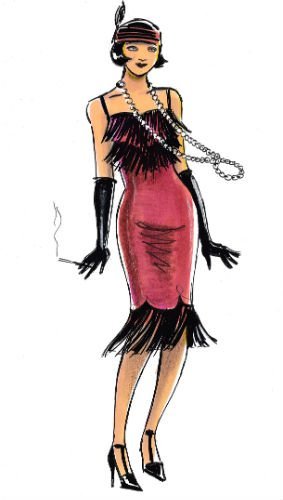
Many ideas for modern day fashion trends originated from this era. For the first time, fashion was considered as something important. Women got tired of adhering to the conventional rules and new fashion trends were a good way of speaking out.
After the Great War had ended, the world saw an enormous increase in wealth and prosperity. People could once again afford luxury, which led to a true revolution in the world of fashion.
Women started to dress more exciting and feminine. Dresses and skirts were lifted up, though most of them would still cover the knees.
1920s Dresses

The shorter dresses also had a more practical sense. During prohibition in the United States, a vibrant underground club scene had emerged. Speakeasies had become immensely popular and became the birthplace of a variety of new dances, such as the Charleston. The introduction of the Flapperdress allowed for more mobility and made dancing much easier.
Women in the Roaring Twenties also walked around more freely, with bare shoulders and uncovered legs. As a result, skin coloured tights were first introduced. These tights were meant to give the impression of uncovered legs. In addition, accessories had become an integral part of an outfit as well. To finish it all off, many women also wore a nice cloche hat.
The ideal image of a woman in the 1920s was boy-like, meaning no curves and large breasts. A wide flapperdress ensured that no curves were accentuated and in order to not stand out, many women also tucked in their breasts.
1920s Men's fashion
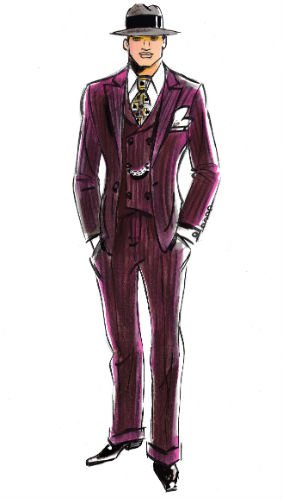
Men’s fashion in the Twenties was not centred on individualism. In fact, numerous occasions specifically required men to wear a suit or a flannel shirt. Most men did not diverge from these social ‘uniforms’. When you look at photographs of this era, you will often encounter large groups of men who are dressed the same. A great portrayal of 1920s men’s fashion can be seen in Baz Luhrmann’s The Great Gatsby.
The lack of individuality certainly did not affect the elegance of 1920s men’s fashion. On the contrary, these men are often considered to be the best dressed men in history. A well tailored suit was of great importance: clothing that was either too loose, tight, short or long was frowned upon. Whether a man bought a pair of trousers or a coat: the outfit had to be tailor-made.
Attention to detail was also an important aspect of Twenties’ fashion. Wrong stitching or a loose thread was rarely seen. A man’s wardrobe usually contained a collection of neatly tailored suits, leather Oxford lace-up shoes and multiple felt hats. In the lower classes of society, men often wore a rubber trench coat with a flannel shirt or a denim overall.
Suits

For both men and boys, a suit was generally the right choice for any public outing. Most suits were made of wool and worn in combination with a white shirt. Sometimes, especially in colder weather, a neat pullover with a v-neck was worn over the shirt. Bow ties were common, but they were by no means as popular as the standard silk or rayon ties.
Boys’ suits were available with long and short trousers. Pinstripes were the most common pattern for these suits. Because most suits were often only available in very neutral colours, like grey, brown or black, most men wore a colourful pocket square.
A typical 1920s men’s suit would look as follows: a two-button single-breasted jacket, with a soft rolled lapel, pockets and an alpaca lining. The accompanying trousers would consist of a tailor-made two-button model with a wide waistband and wide belt loops.
In general, most men wore a completely tailored suit consisting of a jacket with accompanying trousers in the same colour and pattern. For special occasions and colder weather, three-piece suits (jacket, vest and trousers) were often worn. Loose jackets and trousers that did not go well together, were rarely seen.
Coats and cloaks
In colder weather most men wore long coats that just covered up the knees. These coats were thick, warm and in most cases made of wool. Elegant diamond patterns and the colours black, grey and different tones of blue were especially popular with these coats.
Most coats were designed as a three-button double-breasted model. They contained two warm, deep pockets, protected with flaps to prevent damage from rain or snow. Fibres in the Twenties were generally so thick that a lining often wasn’t necessary.

Leather jackets, with or without fur collars, were also very popular in the 1920s. They were commonly worn buttoned-up, had two pockets and in some cases came with a built-in belt around the waist. Most coats were available in black or (dark-) brown with a fur lining.
Hats
Hats in the 1920s came in all different kinds of styles. Among the most popular were the fedora (or Homburg) and the baker boy hat. These hats were often made out of fur felt, velvet, wool felt, fur or corduroy.